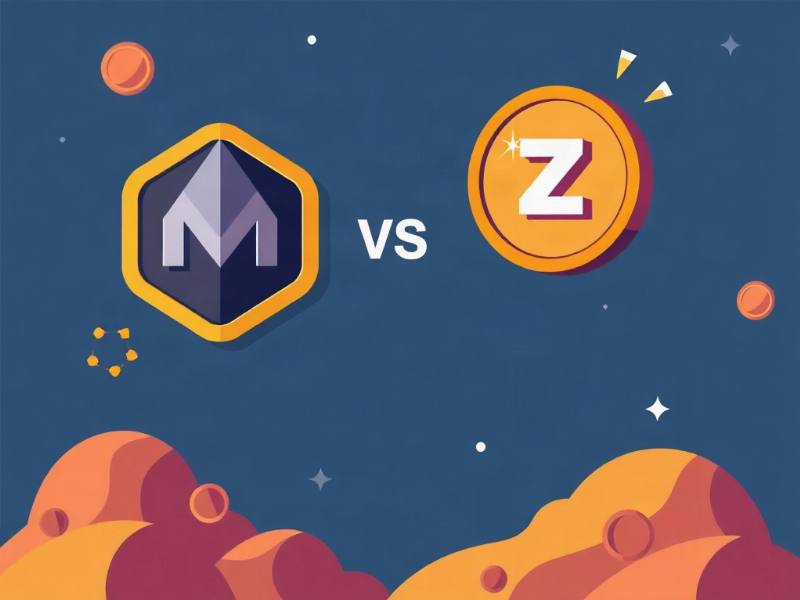
In the evolving landscape of cryptocurrency, privacy remains one of the most debated and scrutinized features. Among the most prominent privacy-focused digital assets, Monero and Zcash stand out for their distinct approaches to obscuring transaction data. For participants within the CryptoMixer community, understanding the nuances of monero vs zcash privacy is essential for making informed decisions about asset management, mixing services, and compliance considerations. This article provides a comprehensive comparison, dissecting the technical foundations, usability implications, and long-term outlook of both protocols.
Foundational Privacy Philosophies
Monero's Approach to Fungibility
Monero was built from the ground up with privacy as its default state. Every Monero transaction is private by default; there is no option to send a "transparent" transaction. This design philosophy prioritizes fungibility—the principle that every unit of currency is interchangeable and indistinguishable from another. In the context of monero vs zcash privacy, Monero's mandatory privacy means that recipients cannot selectively disclose transaction details without specialized tools, and the network inherently obscures sender, receiver, and amount information.
Zcash's Selective Transparency
Zcash takes a different route by offering users a choice between shielded (private) and transparent transactions. Built on zk-SNARKs (zero-knowledge succinct non-interactive arguments of knowledge), Zcash allows participants to prove the validity of a transaction without revealing its contents. This model appeals to users who require regulatory compliance or auditability while still benefiting from cryptographic privacy when needed. The monero vs zcash privacy debate often centers on this fundamental trade-off: default privacy versus optional privacy.
Technical Mechanisms Behind the Privacy
Ring Signatures and Stealth Addresses
Monero employs ring signatures to mix the sender's signature with a group of other users' signatures, making it computationally infeasible to determine which key actually authorized the transaction. Additionally, stealth addresses are generated for each recipient, ensuring that on-chain outputs cannot be linked to a real-world address without the recipient's private view key. These mechanisms work synergistically to provide robust, layer-wide privacy, a cornerstone of the monero vs zcash privacy discussion.
zk-SNARKs and Shielded Transactions
Zcash's cryptographic backbone relies on zk-SNARKs, which allow one party to prove possession of certain information (e.g., that a sender has sufficient balance) without revealing that information itself. Shielded transactions (z-addresses) hide the sender, receiver, and amount, while transparent transactions (t-addresses) function similarly to Bitcoin, allowing for selective disclosure and audit trails. This dual-model approach provides flexibility but also introduces complexity in key management and wallet integration, factors that CryptoMixer users often weigh when evaluating privacy tools.
Usability, Adoption, and Ecosystem
Wallet Support and User Experience
Monero's uniform privacy model simplifies user experience: a single address type and automatic privacy features reduce the learning curve. However, the protocol's reliance on binary formats and command-line tools historically posed barriers for non-technical users. Modern wallets have improved this significantly, but the ethos of "privacy by default" remains unchanged. Zcash, by contrast, requires users to consciously choose between shielded and transparent modes, which can lead to accidental exposure if not managed carefully. For the CryptoMixer audience, understanding these UX differences is crucial for maintaining operational security.
Exchange Listings and Regulatory Considerations
Regulatory scrutiny varies significantly between the two assets. Monero's unwavering privacy has led many centralized exchanges to delist or restrict Monero trading pairs, citing compliance risks. Zcash's optional transparency model has, in some jurisdictions, been viewed more favorably, as users can opt into transparent transactions for reporting purposes. This regulatory landscape directly impacts liquidity, on-ramping, and the viability of mixing services within the CryptoMixer ecosystem. Participants must navigate these constraints when planning transactions or utilizing privacy-enhancing tools.
Performance and Scalability
Block Size and Transaction Throughput
Monero's block size dynamically adjusts based on median block size over a moving window, aiming to accommodate demand while preventing undue centralization. This approach has resulted in larger average block sizes compared to Bitcoin, which can impact sync times and hardware requirements for full nodes. Zcash's block parameters are more static, and the computational overhead of zk-SNARK proof generation can limit transaction throughput. When evaluating monero vs zcash privacy from a performance standpoint, users must balance privacy guarantees against operational efficiency and resource costs.
Energy Efficiency and Mining
Monero utilizes the RandomX proof-of-work algorithm, designed to be ASIC-resistant and conducive to CPU mining. This decision supports decentralization but has implications for energy consumption per transaction. Zcash initially used Equihash, also ASIC-resistant, but has undergone upgrades to optimize proof generation and verification. Both networks continue to evolve their consensus mechanisms, and ongoing research into post-quantum cryptography may shape their long-term sustainability. For CryptoMixer operators, staying informed about these technical shifts is vital for maintaining secure and efficient workflows.
Monero vs Zcash Privacy: Which Suits Your Needs?
Threat Model Alignment
Defining your threat model is the first step in choosing between Monero and Zcash. If your primary concern is indiscriminate surveillance, data scraping, or forensic analysis of transaction graphs, Monero's default privacy offers a higher baseline of protection. If you operate in a context where selective disclosure to auditors, regulators, or business partners is necessary, Zcash's dual-address model provides a pragmatic middle ground. The monero vs zcash privacy distinction ultimately hinges on whether you prioritize universal fungibility or flexible transparency.
Long-Term Privacy Outlook
Both projects face ongoing challenges from advancing blockchain analysis techniques, quantum computing threats, and regulatory pressures. Monero's development roadmap emphasizes cryptographic research, network layer improvements, and user experience enhancements while preserving its core privacy guarantees. Zcash's roadmap focuses on expanding zk-SNARK efficiency, introducing new shielded asset types, and fostering broader adoption through compliance-friendly features. For participants in the CryptoMixer space, monitoring these developments will be key to adapting strategies and maintaining privacy integrity over time.
Practical Implications for CryptoMixer Users
Integrating privacy coins into mixing or tumbling workflows requires a nuanced understanding of each asset's properties. Monero's uniform privacy simplifies certain aspects of coinjoining, as all units are inherently fungible, but it also means that mixing services must support Monero's specific address formats and view key mechanisms. Zcash's optional transparency introduces additional variables: the proportion of shielded versus transparent transactions in a mixing pool can affect the overall anonymity set, and users must be vigilant about address selection and key management. Regardless of the chosen asset, best practices include using hardware wallets, keeping software updated, and staying informed about network upgrades and potential vulnerabilities.
- Monero's default privacy eliminates the need for users to manually opt into shielded transactions, reducing human error.
- Zcash's selective transparency allows for compliance-friendly reporting, but requires disciplined wallet management.
- Both assets benefit from community-driven audit tools, but the types of analytics available differ significantly.
- Mixing services within the CryptoMixer niche should support both assets natively to cater to diverse user needs.
- Understanding the underlying cryptography helps users evaluate the true strength of privacy claims made by third-party services.
- Assess your regulatory environment and determine whether selective disclosure is a requirement.
- Evaluate the technical resources available for managing each asset's specific wallet requirements.
- Consider the long-term roadmap and community activity of each project to gauge sustainability.
- Test small transactions on both networks to familiarize yourself with fee structures, confirmation times, and user interfaces.
- Stay updated on exchange policies and jurisdictional rulings that may affect asset accessibility.
In the final analysis, the monero vs zcash privacy conversation is not about declaring a definitive winner, but about aligning technology choices with personal or organizational risk tolerances, operational requirements, and ethical considerations. Both Monero and Zcash represent significant advancements in cryptographic finance, and their coexistence enriches the broader ecosystem. For the CryptoMixer community, a thorough grasp of their respective strengths, limitations, and regulatory contexts will empower more secure, informed, and resilient participation in the privacy-first dimensions of cryptocurrency.
As the sector matures, ongoing dialogue between developers, users, and regulators will shape how these protocols evolve. Whether you prioritize Monero's unwavering fungibility or Zcash's flexible transparency, the key to effective privacy lies in informed decision-making, disciplined operational security, and a commitment to staying ahead of emerging challenges. By leveraging the insights outlined in this comparison, CryptoMixer participants can navigate the complexities of digital asset privacy with greater confidence and clarity.