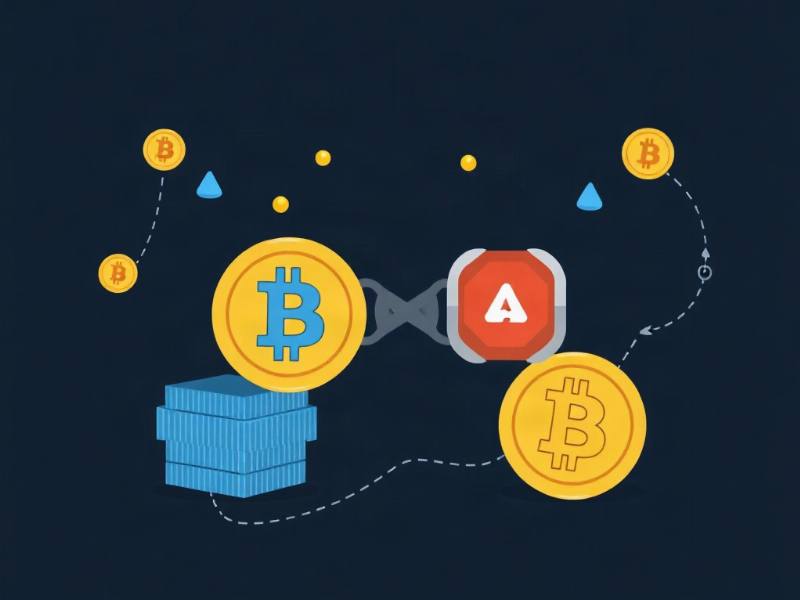
In the evolving landscape of privacy-preserving Bitcoin transactions, understanding the cost structure of CoinJoin protocols is essential for users seeking both anonymity and efficiency. The interplay between coordinator fee versus mining fee in coinjoin determines not only the financial outlay required to mix funds but also the practical speed at which transactions achieve confirmation. This article provides an in-depth examination of how these two fee types differ, why they matter, and how CryptoMixer users can optimize their experience without compromising privacy or paying unnecessary costs.
CoinJoin has become a cornerstone technique for breaking the link between sender and receiver addresses on the Bitcoin network. By aggregating multiple users' inputs into a single transaction, CoinJoin obscures the flow of funds, making blockchain analysis significantly more difficult. However, the privacy benefits come with associated costs that are often misunderstood. Two primary cost components emerge: the coordinator fee, paid to the entity or software facilitating the CoinJoin process, and the mining fee, paid to Bitcoin miners to include the transaction in the next block. While both are expressed in satoshis per byte or as a flat fee, their origins, purposes, and impacts on the user experience differ fundamentally.
The Fundamentals of CoinJoin Fee Structures
How CoinJoin Differs from Standard Bitcoin Transactions
A standard Bitcoin transaction typically involves one or two parties: a spender and a recipient. The transaction size is relatively predictable, and the mining fee required for confirmation depends on the current mempool congestion and the transaction's virtual size. CoinJoin, by contrast, combines inputs from multiple participants into one output structure. A typical CoinJoin transaction with, say, five participants might have inputs from five different addresses and outputs returning change to those same addresses, plus perhaps a destination payment. This increased complexity results in a larger transaction size, which in turn affects the mining fee required for timely confirmation.
Moreover, the coordination layer—often a server or software interface that brings participants together—introduces its own fee model. Some CoinJoin implementations charge a fixed fee per transaction, others take a percentage of the mixed amount, and some operate on a donation basis. Understanding where the coordinator fee versus mining fee in coinjoin fits into this picture is the first step toward cost-effective privacy usage.
The Privacy-Utility Trade-Off
Participants in a CoinJoin must balance the desire for strong anonymity sets against the reality of limited block space. A larger anonymity set—more participants mixing together—generally provides stronger privacy guarantees but produces a larger transaction, raising the mining fee. Conversely, a smaller group may reduce the mining fee but offers less privacy dilution. The coordinator often guides this trade-off, offering different mixing pool sizes or priority levels, each with distinct cost implications.
The Coordinator’s Role and Its Associated Fees
Operational Costs of Maintaining a CoinJoin Coordinator
Running a CoinJoin coordinator is not a trivial endeavor. The entity operating the coordinator must maintain reliable servers, implement robust security measures to prevent theft or surveillance, and often absorb liquidity risks during the mixing process. Additionally, coordinators must stay compliant with evolving regulatory frameworks, which may require KYC/AML procedures, server audits, and transparent reporting. These operational costs are ultimately passed on to users in the form of a coordinator fee.
The coordinator fee can manifest in several ways. Flat fees might range from a few thousand satoshis for small mixes to tens of thousands for larger transactions. Percentage-based fees typically range from 1% to 3% of the total amount being mixed, though some coordinators offer tiered pricing where higher volumes attract lower percentages. Donation-based models rely on user goodwill, with suggested contributions displayed but not enforced. Regardless of the model, the coordinator fee represents the cost of convening the mix, ensuring the protocol runs smoothly, and providing the infrastructure that makes privacy achievable at scale.
How Coordinator Fees Influence User Privacy and Throughput
Beyond the obvious financial impact, coordinator fees indirectly affect the privacy and speed of CoinJoin transactions. A higher coordinator fee might enable a coordinator to offer faster pool assembly, more diverse participant selection, or enhanced features like timed mixes or submarine swaps. These improvements can reduce the time users wait for a suitable mix to form, thereby decreasing the window during which timing attacks could potentially deanonymize participants. However, if the fee is perceived as excessive, users might opt for cheaper or free alternatives, potentially exposing themselves to less reputable or less secure mixing services.
Furthermore, the coordinator fee versus mining fee in coinjoin dynamic becomes a decision point for power users. A savvy user might accept a slightly higher coordinator fee if it means accessing a coordinator with a proven track record of high anonymity sets and reliable payouts, thereby reducing the risk of losing funds to scams or failed mixes.
Mining Fees: The Backbone of Bitcoin Transaction Confirmation
Why Mining Fees Matter for CoinJoin Participants
Once a CoinJoin transaction is constructed and signed by all participants, it must be broadcast to the Bitcoin network for inclusion in a block. Miners select transactions based on fee rates, prioritizing those that offer the highest satoshi-per-virtual-byte (sat/vB) ratio. For CoinJoin transactions, the size is typically larger than a standard payment transaction, meaning the absolute mining fee required for confirmation can be substantially higher.
If the mining fee is set too low, the transaction may languish in the mempool for hours or even days, exposing the mixing activity to potential network analysis. In extreme cases, low-fee transactions may never be confirmed, forcing users to resort to fee replacement (RBF) or child-pays-for-parent (CPFP) strategies, which add complexity and may inadvertently reveal additional information about the transaction's purpose.
Variability of Mining Fees Based on Network Congestion
Mining fees are not static; they fluctuate in real time based on the total demand for block space. During periods of high activity—such as market volatility, major protocol upgrades, or widespread ordinals inscription—mempool congestion spikes, and fee rates can climb from a few sat/vB to dozens or even hundreds of sat/vB. During quiet periods, low fees of 1–5 sat/vB may suffice for timely confirmation.
For CoinJoin users, this variability means that the same mix transaction might cost 20,000 satoshis in mining fees during a bull run but only 5,0